October 5, 2026 | Story by Joëlle Walls
 Access and opportunity are factors that drive a community’s economic mobility and an individual’s pathway to future career opportunities.
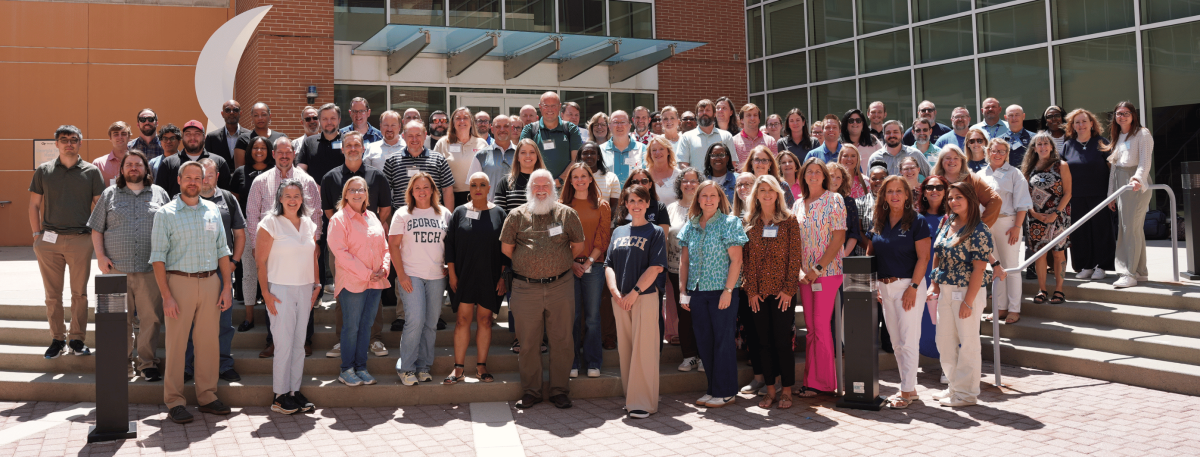
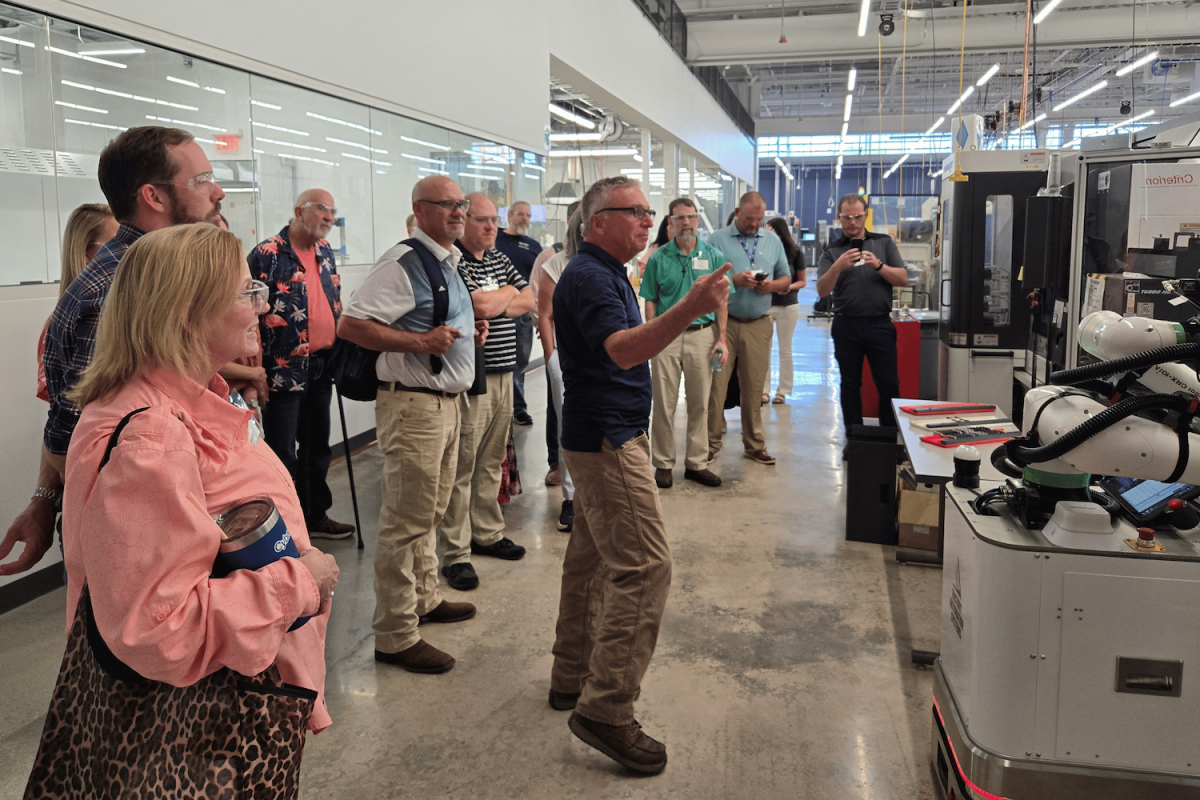
That belief is shared by educators from across the state who gather at Georgia Tech every fall and spring to exchange ideas, explore new learning opportunities, and strengthen a growing professional learning community through the Rural Computer Science Initiative.
Now in its fifth year, the initiative has grown to include 60 school districts across Georgia and has reached more than 14,000 students. The state-funded collaboration brings together faculty, staff, and researchers from STEM@GTRI, the K-12 outreach arm of the Georgia Tech Research Institute, and the Center for Education Integrating Science, Mathematics, and Computing (CEISMC) in the College of Lifetime Learning.
"What started with eight school districts has grown into a statewide community of educators committed to expanding opportunities for students through computer science," said Norman "Storm" Robinson III, associate director for school and community engagement at CEISMC. "At its core, this work is about making sure students in rural communities have access to the same kinds of experiences, skills, and career pathways as students anywhere else in Georgia."
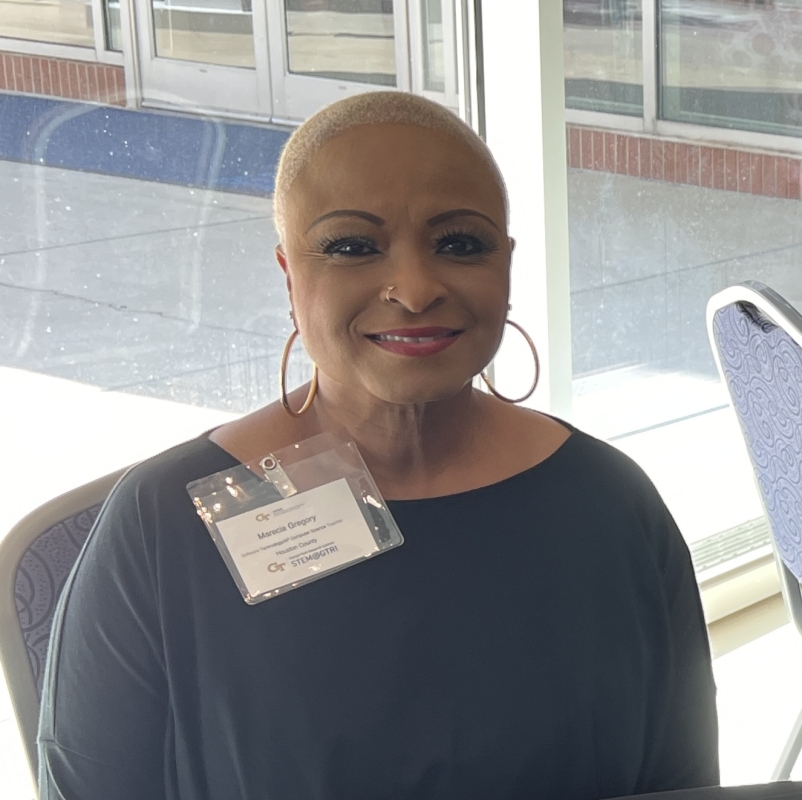 For Marecia Gregory, a computer science teacher at Northside High School in Houston County, participation in the Rural Computer Science Initiative has influenced how she approaches computer science instruction and student engagement.
“The initiative has encouraged me to create learning experiences that are hands-on, relevant, and connected to real-world applications so that students can see themselves as capable problem-solvers and creators,” she said. “I now approach instruction with a greater focus on building student confidence, increasing engagement, and helping students recognize the many ways computer science can connect to their future.”
A foundational feature of the program is its hybrid co-teaching model in which CEISMC and GTRI teams provide real-time, online instruction in partnership with in-person teachers. Students then apply the concepts through independent, teacher-led projects using problem-based learning.
As the Rural Computer Science Initiative continues to evolve, expanding opportunities for students to connect their computer science skills to the needs of their communities remains a top priority. A new AI for Good Challenge was introduced this fall in which students identify local issues and develop proposals exploring how artificial intelligence or machine learning can be part of the solution.
“The AI for Good Challenge will allow students to explore how artificial intelligence can make a meaningful impact on their community. During the challenge, students will research how AI can be deployed to meet a local challenge and create a pitch to advocate for resources to make their vision become a reality,” said Sean Mulvanity, senior research associate at STEM@GTRI. “ Several proposals will be selected to work with researchers at Georgia Tech to design and deploy their proposed solution. We are looking forward to seeing their ideas.”